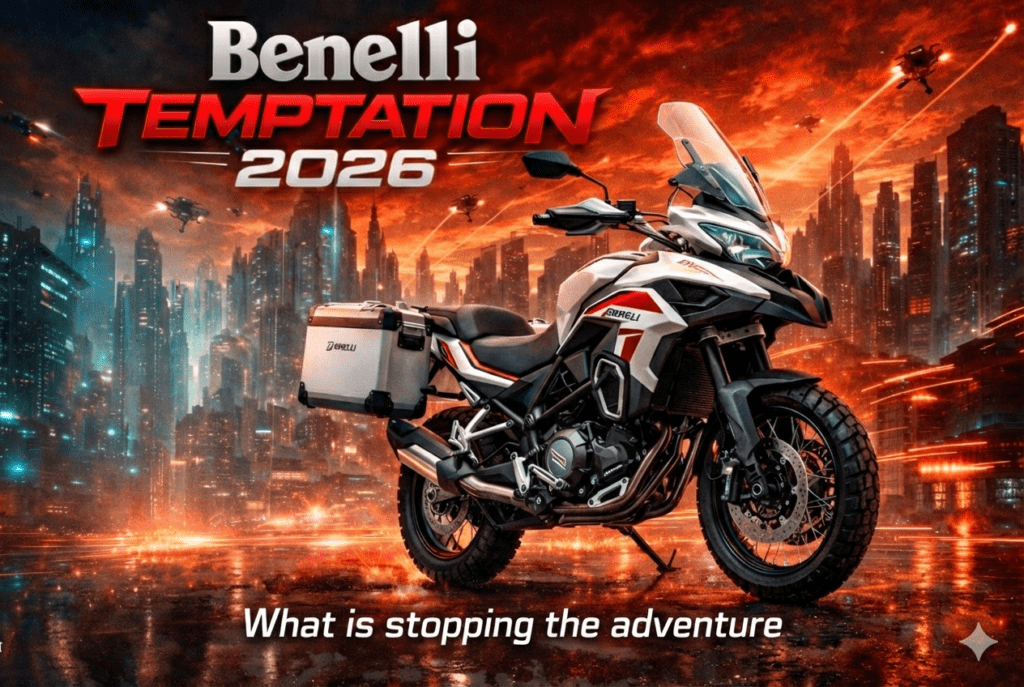
Benelli Temptation
A Storied Beginning: The Birth of a Classic
Benelli Motorcycles traces its roots back to 1911 in Pesaro, Italy, when Teresa Boni Benelli and her sons started a small workshop that would grow into one of the oldest motorcycle makers in the world. Over the years, Benelli built a legacy of innovation, engineering passion, and motorsport success. Early models quickly gained respect for their performance, reliability and distinct Italian flair — traits that made Benelli a celebrated name among riders in Europe and beyond.
Its first notable foray into motorcycling came shortly after World War I, with small-capacity engines fitted to lightweight frames — laying the groundwork for later racing and road bikes that would define the brand’s character
Ownership Changes: Rise, Fall, and a Chinese Revival
Benelli’s history through the 20th century included periods of financial struggle and ownership changes, including private Italian industrialists in the 1990s and early 2000s. However, a landmark shift came in 2005, when the brand was acquired by Qianjiang Motorcycle Group, a Chinese company. This brought new investment and global ambitions, with design and R&D retained in Italy while production and broader manufacturing capacity tapped into Qianjiang’s scale.
Qianjiang later became part of the Geely Holding Group (also owner of Volvo and other global brands), signaling deeper integration into a large industrial ecosystem.
Why China Buys Legacy Brands
You might rightly ask: if China has massive industrial capacity, why buy heritage companies like Benelli?
The answer lies in brand legacy and market perception. Chinese manufacturers are technically capable and financially powerful, but they often lack worldwide recognition or historical prestige. By acquiring established European marques — with decades (or even a century) of history — companies like Qianjiang can:
Leverage emotional legacy that resonates with enthusiasts around the world.
Command premium positioning in competitive markets, where “heritage” still matters.
Gain instant credibility vs. launching a new name from scratch in crowded global markets.
In essence, the legacy gives them a story and identity that pure industrial strength alone cannot buy.
Benelli in the Indian Market: A Rocky Road
Initial Entry and Partnership Turbulence
Benelli entered the Indian market around 2014–2015 in partnership with DSK Motowheels, targeting the rising premium motorcycle segment with bikes from mid-range to high displacement. The strategy was to appeal to riders who wanted European styling and performance at competitive prices.
However, the initial partnership ran into trouble. Financial challenges within the Indian partner led to distribution and service disruptions — ultimately forcing Benelli to halt operations temporarily in 2018.
New Partner, Renewed Push
Later in 2018, Benelli re-entered India with a new partner — Adishwar Auto Ride International (AARI), part of the Mahavir Group — announcing plans to expand sales, service and even set up assembly facilities near Hyderabad.
This second effort aimed to bring models like the TRK 502 adventure tourer and Leoncino 500 scrambler to Indian buyers, often assembled locally from CKD kits to reduce costs and tariffs.
Challenges in the Indian Market
Despite great-looking motorcycles and intriguing product lineups, Benelli has faced several persistent issues in India — and many enthusiasts and owners have pointed them out plainly:
1. Trust and Brand Perception
Although Benelli carries Italian roots, its ownership and production structure cause confusion among buyers, some of whom view the brand as “just another Chinese label” rather than a true European legacy. This matters a great deal in a market where brand image influences purchase decisions.
2. After-Sales & Service Network
A major complaint from riders has been sporadic or weak service support, long waits for routine maintenance or repairs, and inconsistent dealership standards — all damaging consumer confidence. Reviews from owners frequently mention long waiting times for even basic parts or delays in workshop responses.
3. Spare Parts Availability
Spare parts logistics has been another stumbling block — with some parts either hard to source or available only after long delays, increasing ownership stress and costs.
4. Pricing and Market Position
Compared to strong global and Japanese competitors (Honda, Kawasaki) and Indian stalwarts like Royal Enfield, Benelli bikes sometimes struggle to offer clear value for money — especially when premium pricing is combined with the above issues. Indian riders often prioritise reliability and dealer support alongside performance, areas where Benelli has unevenly delivered.
A Path Forward: Beyond Selling Bikes
For Benelli to truly thrive in India, it must do more than just sell motorcycles. Here’s what will help solidify its foothold:
Build Trust Through Reliability
Consistent product quality and a dependable service network are foundational — riders need confidence that their bikes will be supported long after purchase.
Strengthen After-Sales Ecosystem
A broad, well-trained network of authorised service centres with good spare parts availability will reduce wait times and improve ownership experiences.
Competitive Pricing with Clear Value Proposition
Positioning motorcycles not just on looks or performance, but on long-term ownership value — including fuel efficiency, lower maintenance costs, and warranty support — will help in a price-sensitive market like India.
Engage the Community
Authentic rider engagement — events, test rides, owner clubs, enthusiast feedback loops — can turn passion into advocacy.
Final Thoughts: Why We Want Benelli to Succeed
Benelli’s motorcycles — from scramblers to adventure tourers — are visually striking and packed with potential. Competition from them, alongside Honda, Kawasaki, Royal Enfield and others, benefits customers by driving innovation and value. But premium bikes aren’t just about flash — they’re about trust, support and experience.
If Benelli can learn from past missteps and focus on building deeper relationships with Indian riders — not just selling bikes but supporting riders — it can turn its legacy into long-term success, not just a storied nameplate on a showroom wall