
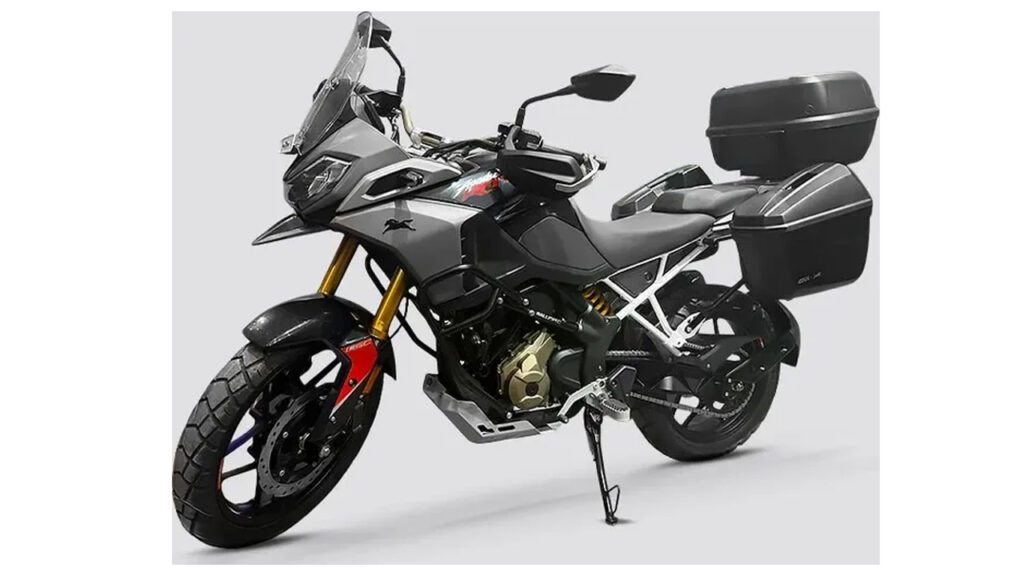
TVS RTX 300
It seems “too good to be true” because TVS has aggressively undercut the competition (like the KTM 250 Adventure and Suzuki V-Strom SX) while offering specs that look superior on paper.
Here is a breakdown of why the package looks so good, and the “hidden” downsides you should look for before buying
Why it looks like a steal (The “Great Package”)
The value proposition is massive.
The Price: Launching around ₹1.99 Lakh, it is significantly cheaper than its direct rivals.
The Tech: It carries over the TVS DNA of over-delivering on tech. It has a 5-inch TFT, 4 ride modes (Urban, Rain, Tour, Rally), switchable ABS, and Traction Control.
The Engine: Note that this is not the familiar 312cc reverse-inclined engine from the Apache RR310/BMW G310GS. It is a new 299cc “RTX D4” liquid-cooled engine pushing out ~35 BHP and 28.5 Nm.
Touring Capability: It is purpose-built for this with a large 19-inch front wheel, upright ergonomics, and decent wind protection.
The “Catch”: Why you should wait
Since you mentioned you want to “look deeper,” here are the specific issues early reviewers and long-term testers are hinting at. These are the things to watch out for when you take a test ride:
1. It’s a Brand New Engine Platform Unlike the RR310 engine which has been refined over years, this 299cc unit is new.
Risk: First-generation engines often have “teething issues” (coolant leaks, sensor failures, or seal issues) that are quietly fixed in the second batch.
The “Beta Tester” feeling: You don’t want to be the one discovering these bugs for TVS.
2. Fueling and Low-End Lag Early reports suggest the fueling isn’t perfect yet.
The Issue: Some riders report a “flat spot” or hesitation when you open the throttle aggressively, especially in higher gears.
City Riding: It might require more gear shifts than you expect. You can’t just be lazy and chug along in 3rd gear at low speeds like you can on a Classic 350 or a Harley x440.
3. Vibrations (The TVS trait) While TVS engines are peppy, they are rarely “Honda smooth.”
The Buzz: There is a noted buzz in the handlebars and footpegs once you cross 6,000 RPM (which is roughly 100-110 km/h cruising speed). For a “long distance touring machine,” this could be fatiguing after 2 hours.
4. The “TVS Network” Double-Edged Sword You listed the network as a pro, and for availability, it is. But for service experience, it can be a con.
The Reality: Servicing a high-tech, liquid-cooled premium adventure bike at the same service center that rushes through hundreds of Jupiter scooters and XL100s daily can be frustrating. Mechanics may not be trained on the specific electronics or torque specs of the RTX 300 yet.
Verdict: Trust your gut
Your plan to wait is 99% the right move.
TVS is famous for “silently updating” their bikes 6 months after launch to fix vibrations and ECU maps (they did this with the RTR 200 4V and the RR310).
My suggestion: Wait for the first service reviews to drop on YouTube (owners usually post these 2-3 months after buying). If owners aren’t complaining about stalling or electronic glitches by early 2026, then go for it.